Our Board Members
The USMX Board of Directors is comprised of senior executives from member companies who provide strategic leadership, governance, and industry expertise in support of the Alliance's mission.
For generations, USMX has represented employers across the East and Gulf Coasts, fostering productive labor relations, supporting America's waterfront workforce, and helping strengthen the nation's maritime industry.

Explore the milestones that have shaped USMX and the enduring partnerships that continue to strengthen the East and Gulf Coast waterfront.

1957

Ocean carriers began participating directly in Master Contract negotiations, establishing a more active role in shaping coastwide labor relations. Their involvement would lay the foundation for decades of collaboration between management and labor across the East and Gulf Coasts.

1969

As containerization transformed global trade, the industry adopted the Rules on Containers, known as the "50-Mile Rule." In response to the operational and labor challenges that followed, carriers organized through the Carriers Container Council (CCC), creating a unified voice on issues that would shape the future of the maritime industry.

1972

The Carriers Container Council (CCC) is formally recognized in the Master Contract Containerization Agreement, solidifying its role in coastwide collective bargaining. The organization provided a coordinated forum for carriers to address emerging issues related to containerization, labor, and industry modernization.

1977

Following an extended labor dispute, industry leaders and the ILA reached a landmark agreement establishing an innovative funding framework to protect collectively bargained fringe benefit programs. The agreement strengthened labor-management relations and laid the foundation for decades of collaboration across the East and Gulf Coast waterfront.

1987

Management and labor adopted a Statement of Purpose, outlining common goals for the future of the industry. The agreement reflected a more collaborative approach to bargaining and established a foundation for addressing challenges jointly rather than through conflict.
1992

CCC led efforts to align regional labor agreements and reduce inconsistencies across ports. By encouraging broader adoption of common contract terms, the organization advanced the goal of a unified coastwide framework.
1996

After more than a year of negotiations, management and the ILA reached the first Master Contract covering every ILA port on the East and Gulf Coasts. The agreement delivered greater consistency across the industry while creating significant operational and financial efficiencies.

1997

Building on the success of the coastwide bargaining coalition, United States Maritime Alliance (USMX) was incorporated. The new organization united carriers, stevedores, and port associations under a single management representative dedicated to advancing industry interests.
2002

With a single coastwide Master Contract and health benefits program in place, USMX became the principal management representative for East and Gulf Coast collective bargaining. The organization brought carriers, terminal operators, and port associations together under one unified structure, building on decades of leadership by CCC, which officially sunset operations. Its administrative and operational expertise continued through the creation of the CCC Service Corporation (CCCSC), a division of USMX established to support contract administration, collections, accounting, and industry services.

2009
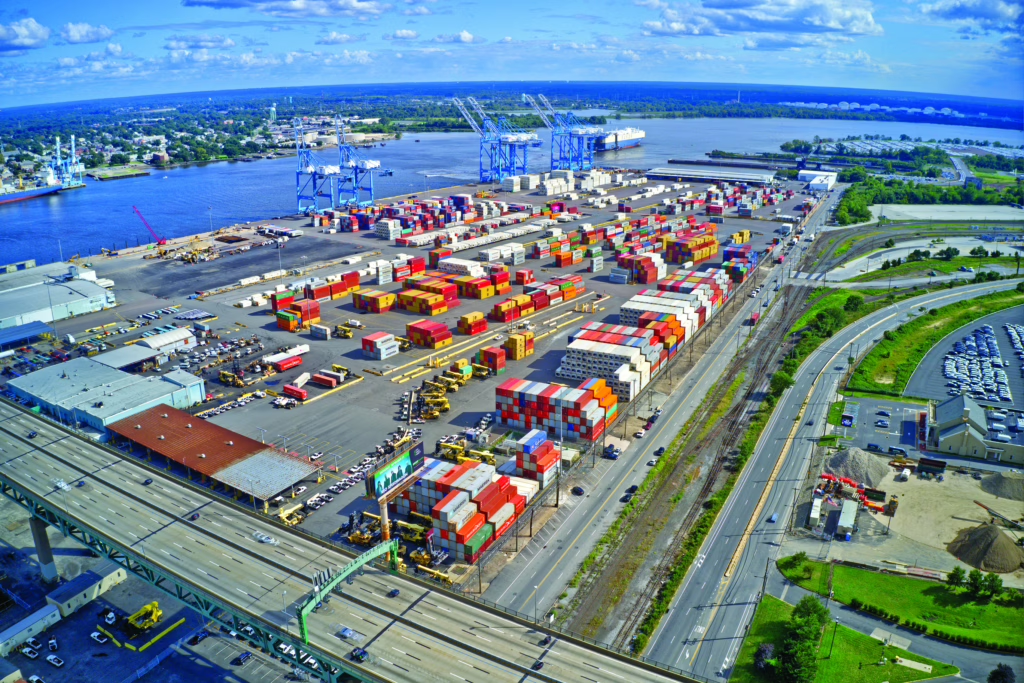
In response to the economic recession of 2008, USMX and the ILA reopened the 2004–2010 Master Contract and negotiated a three-year extension that addressed the unprecedented economic challenges facing the maritime industry.

2012

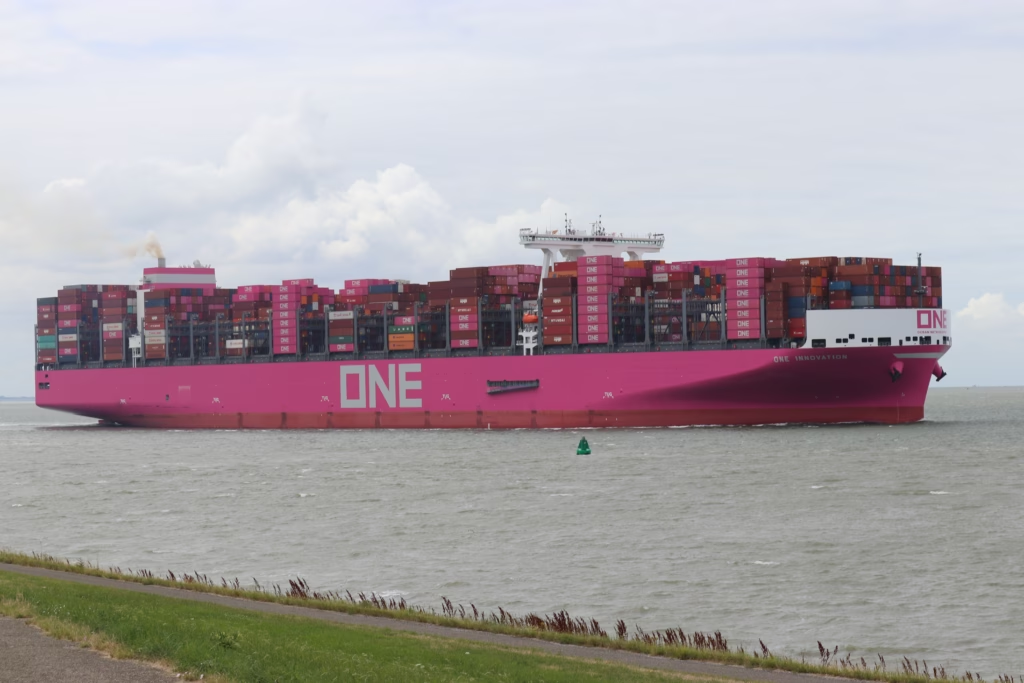
USMX and the ILA negotiated landmark contract language that enabled the adoption of new technology while protecting longshore jobs through comprehensive workforce protection provisions.
2020

As the nation faced the challenges of COVID-19, USMX and the ILA responded by creating the COVID Pandemic Relief Fund, extending healthcare coverage, and providing additional financial support to ILA members while ensuring the uninterrupted movement of critical cargo.

2024

After the Francis Scott Key Bridge collapse disrupted operations at the Port of Baltimore, USMX and the ILA partnered to provide supplemental unemployment benefits for impacted ILA members, reaffirming their commitment to supporting the waterfront workforce during extraordinary circumstances.

2025

USMX and the ILA successfully negotiated a six-year Master Contract covering 2024–2030, balancing innovation, workforce protections, and long-term stability for the East and Gulf Coast waterfront. The negotiations took place against the backdrop of the 2024 presidential election, bringing heightened national attention to organized labor, international trade, and the potential impact of a work stoppage on the U.S. economy. Despite a three-day strike in October 2024, the parties remained focused on reaching a negotiated solution and ultimately secured a landmark agreement.

Today

USMX represents carriers, terminal operators, and port associations across the East and Gulf Coasts, negotiating with the ILA and working collaboratively to implement and administer the Master Contract. Supported by CCCSC, the organization advances safety and training, administers and safeguards industry benefits, and works to strengthen America’s ports, support its workforce, and keep our economy moving.

The USMX Board of Directors is comprised of senior executives from member companies who provide strategic leadership, governance, and industry expertise in support of the Alliance's mission.